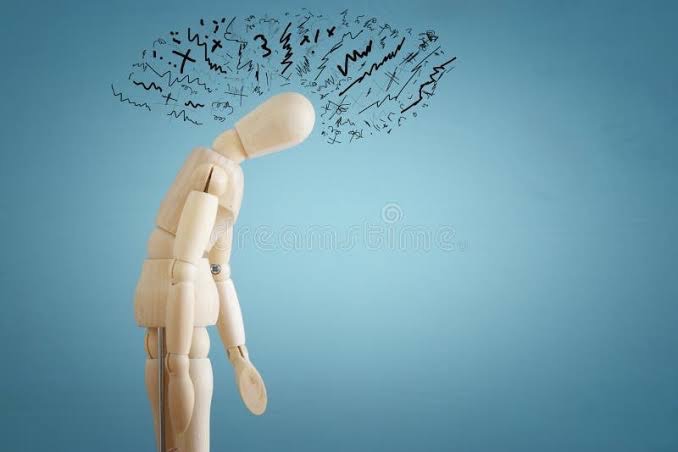
Knowing the Unknowable

The unknown is unknowable.

Why?

Because its’ in the name.

What am I afraid of?

The unknown future.

That’s where the anxiety comes from. Wanting to know the future.

“Do not disturb yourself by imagining your whole life at once. Do not sit in grief imagining what discontents are yet to come. Instead, ask yourself in any given moment: ‘What is so be unbearable about this? Why can’t I endure it?” – Meditations 8:36, Marcus Aurelius

Look at the “bad” things that have happened in your life. Did you see them coming?

Probably not, or you would have avoided them.

But is what happened really bad?

Maybe, maybe not.

But you probably didn’t see the good things coming either.

Whether something is good or bad is unknowable to you at the time.

We as humans are limited in knowing what is good or bad in any given moment.

That only becomes clear in hindsight.

The best any of us can do is get the most out of this moment.

Being present cures anxiety.

“True happiness is to enjoy the present, without anxious dependence upon the future.” – On the Happy Life, Seneca
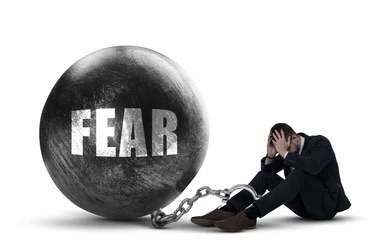
Fear

“The only thing we have to fear is fear itself.” – Franklin Roosevelt

Fear will make cowards of us all.

It can be fear of failure, of exposure as a fraud, of losing what we hold dear. The possibilities are endless.

Fear can make you do and say things you would never do or say in normal circumstances.

How do you combat fear?

Put one foot in front of the other. Take it one day at a time.

Fear can paralyze you.

Often fear is about controlling the uncontrollable.

Something happens to you, and you want it fixed now.

“Man is not worried by real problems so much as by his imagined anxieties about real problems.” – Epictetus

We worry about what the future holds. But none of us is guaranteed a future at all.

Fear grips you, and you get stuck.

You are afraid of the unknown. You are afraid to take the next step.

Is it the problems that worry you or the catastrophes you invent about those problems?

When you are afraid, the future that you invent is usually a dark and dangerous one.

“Never let the future disturb you. You will meet it, if you have to, with the same weapons of reason which today arm you against the present.” – Marcus Aurelius

Think about your life. You are 100% in getting through bad days.

Just because the future is uncertain why does it have to be bad?

What if it all works out?

Don’t get upset. Keep going. You will have the tools to meet what comes your way when it comes your way.

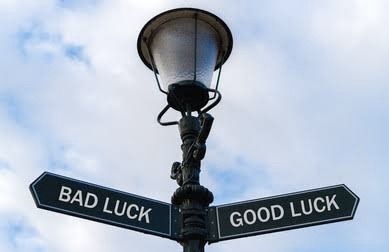
Good Luck, Bad Luck

There is an old Zen story. A farmer’s horse runs away. His neighbors say to the farmer, “What bad luck.” The farmer says, “Maybe.”

The next day the horse comes back followed by a pack of wild horses. His neighbors say to the farmer, “What good luck.” The farmer says, “Maybe.”

The next day the farmer’s son is trying to break one of the wild horses and falls off and breaks his leg. His neighbors say to the farmer, “What bad luck.” The farmer says, “Maybe.”

The next day the army comes through the town to draft every able bodied man. The farmer’s son is spared because of the broken leg. His neighbors say to the farmer, “What good luck.” The farmer says, “Maybe.”

This fable is about perspective.

A situation is what it is. Good or bad is your judgement of the situation.

“It’s not things that trouble us, but our judgement about things” – Epictetus

As the story says, what seems to be good luck can turn out bad and what seems to be bad luck can turn out good.

The old farmer kept all of this in perspective.

Life will happen to each and every one of us. We make situations more complicated when we add judgments to what happens.

Now keeping our judgements in check is easier said than done.

When something great happens to us we want to celebrate, not necessarily knowing that catastrophe could be right around the corner because of this great thing.

Similarly something bad happens to us and all we can think about is the catastrophe that has befallen us, not necessarily knowing that it could be protecting us from something worse or opening us up to something better.

We cannot control what happens to us. We can control how we respond to what happens to us.

Our response is based on our judgement.

If we can look at the situation without assigning good or bad to it we have a fighting chance of coming out better on the other side.

Planning v. Perseverating

The difference between planning and perseverating is worry.

Planning is being prepared to do your best. It is focusing on the effort.

Perseverating is worrying about the outcome.

Planning brings down anxiety when you focus on the effort. When you focus on the outcome you begin to worry.

Why?

Because in every situation you have little control over outcomes. Once the plan is out in the world, t m he outcome is out of your hands.

The key is focusing on the effort. If you focus on the effort, the outcome usually follows.

Now with that being said planning can become its own issue.

Planning can beget procrastination. You procrastinate because you are afraid to start. You are afraid to start because you are perseverating on the outcome.

“In some ways, planning is focused daydreaming. It allows us to occupy a very cozy conceptual place that is devoid of the randomness and uncertainty inherent in our lives.” Bullet Journal Newsletter, 3/7/24

Uncertainty is where anxiety lives. Planning can help with that anxiety as long as it doesn’t become paralysis.

“Perfect is the enemy of good.” – Voltaire

Striving for perfection leads to procrastination because you are perseverating on the outcome. Your plans will never be perfect.

Striving for perfect is your way of trying to control the outcome, which you have very little control over.

Have a plan and focus on the effort. Execute the plan, and live with the outcome.

“And now that you don’t have to be perfect, you can be good.” – John Steinbeck, East of Eden

Anxiety

Anxiety is fear of the future.

“We suffer more in imagination than in reality.” – Seneca

Nine times out of ten what you fear most never comes to fruition.

Yet your brain in the moment just can’t come to that conclusion. The more you try not to think about it the more anxiety you feel.

So how do you overcome anxiety?

Be present. Focus on what you are doing in that moment.

Let this moment push the fear aside.

If and when you get to the moment you fear then you can be present and deal with it.

However most of the time the moment that you fear never comes or isn’t as bad as you imagined.

And you have wasted all of that time worrying about something that never actually happens.

Be present. Life will come as it comes. You can only control your reaction to what happens.