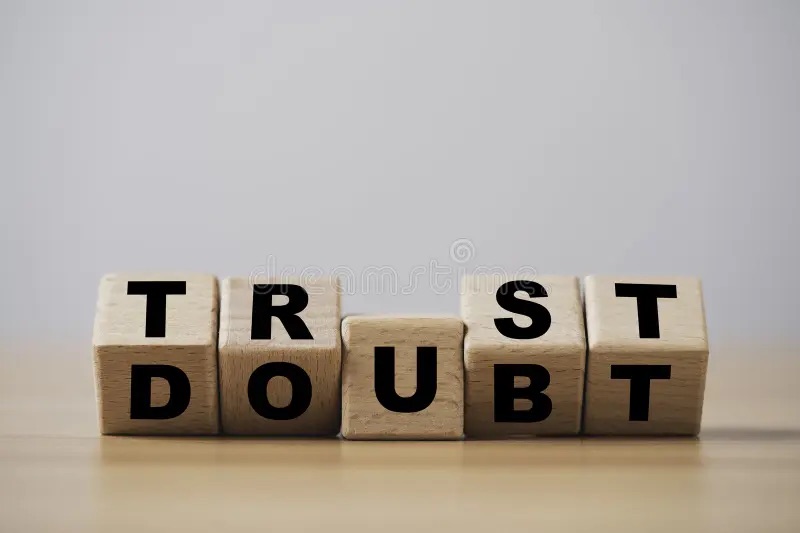
Doubt

Doubt is the brain worrying about the future.

Here is the kicker the future is unknown.

There will always be doubt about the future.

Your worst fears become realities, but only in your own mind.

Are any of those worst fears going to happen?

I don’t know. No one does.

“He who suffers before it is necessary, suffers more than necessary.” – Moral Letters to Lucilius, Letter 98, Section 8, Seneca

If something bad is going to happen, it is going to happen. Worrying about it only makes us suffer twice.

Trust that you will be able to handle whatever comes your way with the skills that you already have.

“Never let the future disturb you. You will meet it, if you have to, with the same weapons of reason which today arm you against the present.” – Meditations, Book 7.8, Marcus Aurelius

Most of the time our worst fears only happen in our imagination.

Now the future may not turn out the way you hoped, but is that your worst fear?

Not necessarily. Sometimes, we don’t know what we need out of life.

Life tells us what we need.

It is better to ride the wave and adapt to new circumstances.

Control what you control. Your attitude and response to what happens.

It’s often better to lower your expectations.

Your serenity is in inverse proportion to your expectations.

Give life your best effort and adapt to whatever outcome comes your way.

Patience

Patience is a virtue.

Unfortunately I have none.

I want things to happen when I want them to happen.

That is not the way the world works.

What happens will happen when it happens.

You can fight that if you would like, but it is a losing battle.

Resistance to this fact is your ego telling you that you are more important than anyone else and the world should bend to your will.

Acceptance of this fact will make your life much easier.

“Patience is about actually showing up for the life you have instead of the one you’re anticipating or mourning.” – Daily Verse newsletter

Whatever you are waiting for will happen or not when it happens.

Misery while waiting for it is optional.

“To bear trials with a calm mind robs misfortune of its strength and burden.” – Hercules Oetaeus, Seneca

Life will happen on its own schedule.

We have very little control over that especially when it comes to people, places, and things.

All we can ask for patience to accept what happens when it happens.

Knowing the Unknowable

The unknown is unknowable.

Why?

Because its’ in the name.

What am I afraid of?

The unknown future.

That’s where the anxiety comes from. Wanting to know the future.

“Do not disturb yourself by imagining your whole life at once. Do not sit in grief imagining what discontents are yet to come. Instead, ask yourself in any given moment: ‘What is so be unbearable about this? Why can’t I endure it?” – Meditations 8:36, Marcus Aurelius

Look at the “bad” things that have happened in your life. Did you see them coming?

Probably not, or you would have avoided them.

But is what happened really bad?

Maybe, maybe not.

But you probably didn’t see the good things coming either.

Whether something is good or bad is unknowable to you at the time.

We as humans are limited in knowing what is good or bad in any given moment.

That only becomes clear in hindsight.

The best any of us can do is get the most out of this moment.

Being present cures anxiety.

“True happiness is to enjoy the present, without anxious dependence upon the future.” – On the Happy Life, Seneca

Preparing to Live

“A most dangerous temptation is the temptation to prepare to live, instead of living. The future does not belong to you. Therefore, remember to live the best way you know now.” – Leo Tolstoy, A Calendar of Wisdom

We all have fallen into the trap of preparing to live.

When we get the new job, we will have it made.

When we get more money, we will take that trip.

When we retire, we will have time to spend with our families.

We all forget that the future is promised to no one.

We need to live each day to its fullest.

Now that doesn’t mean we should be reckless with our time, our money, or our life.

It means we should be intentional with what we do with them.

“Everyone hurries his life on and suffers from a yearning for the future and a weariness of the present. But he who bestows all of his time on his own needs, who plans out every day as if it were his last, neither longs for nor fears the morrow.” – Seneca

Don’t put off to tomorrow, something you need to do today.

Tomorrow may never come.

Don’t prepare to live, live every day.

Follow Nature’s Course

“Everything has to submit to what happens, but only rational beings are given the power to follow what happens voluntarily.” – Marcus Aurelius, Meditations, Book 10.28

What is going to happen is going to happen. We have less control over the future than we think.

We can complain about it. We can get angry about it.

Your reaction will not change the outcome.

“The Fates guide the person who accepts them and hinders the person who resists them.” – Cleanthes

We only control our response, so we must accept what has happened and move on.

Use it as a learning experience. Use it as fuel to find something better, to be better.

“Oh, wretched I, to whom this mischance is happened! Nay, happy I, to whom this thing happened, I can continue without grief; neither wounded by that which is present, nor in fear of that which is to come.” Marcus Aurelius, Meditations, Book 4.44

Often the worst-case scenarios that we invent in our head never come true. We rob the joy from today by worrying about things that may never happen tomorrow.

“We suffer more in imagination than in reality.” – Seneca.

In the moment, it may feel like the end of the world. Unless it has killed you, then it’s not the end of the world. If it has killed you, then your pain is over.

If it hasn’t killed you, then use it to make you better and stronger.

Don’t quit. One foot in front of the other. One day at a time.

Living for Today

When life is easy, we tend to forget that tomorrow is not guaranteed to anyone.

We may live for another 50 years or for another 50 seconds.

Bad stuff happens. Car accident, heart attack, random act of violence. No one knows.

That doesn’t mean we should live recklessly. It just means we should savor the present moment.

No regrets is a coward’s motto. We all have regrets. It’s what we do with them that matters.

We have to stop worrying about past mistakes. We would all like to be perfect and not have done dumb shit in our life. That’s an impossibility.

Mistakes will be made. Some of them will be HUGE, life altering. Then what?

“You just do it. You force yourself to get up. You force yourself to put one foot in front of the other, and God damn it, you refuse to let it get to you. You fight. You cry. You curse. Then you go about the business of living.” – Elizabeth Taylor

You may post your best self on social media. But what about the days you can barely get out of bed?

Guess what? No matter how good your life is, we all have bad days.

We should prepare ourselves for what may happen. Premeditatio Malorum. But not worry about what outcome may actually happen.

“We suffer more in imagination than in reality. “ – Seneca

We spend too much time worrying about a future that we are horrible at predicting.

Live in the present moment Because that is all we have.

“At dawn, when you have trouble getting out of bed, tell yourself: “I have to go to work — as a human being. What do I have to complain of, if I’m going to do what I was born for — the things I was brought into the world to do? Or is this what I was created for? To huddle under the blankets and stay warm?” – Marcus Aurelius, Meditations

It does not have to be a great day. It just has to be a day. Just get up and live it.

You don’t have to take the 30,000 foot view. My mom on once said to me during a difficult time get through the next 10 minutes, then the next 10 minutes.

Remember it is a privilege to be above the soil. There are more people than you can imagine who are breathing their last breath at this very moment.

Do not waste a moment that you still have breath.

If you have life be thankful. No matter your situation.

“Nature brings what is good for everyone and everything, and at the precise moment.” – Marcus Aurelius, Meditations

Life provides you with what you need if you are willing to accept it. It may look like an obstacle or bad luck, but that may disguise the opportunity.

Wisdom

Wisdom is a journey not a destination.

It comes from seeking knowledge not facts. It comes from developing skills

Wisdom comes from opening your mind to new ideas. Even ideas that seem contrary to your worldview.

Epicureanism is supposedly diametrically opposed to Stoicism. However Seneca quotes Epicurus repeatedly.

“I shall never be ashamed of citing a bad author if the line is good.” – Seneca

Wisdom is about seeking the truth. The truth is the truth.

Even if you disagree you should try to understand what they have to say.

You don’t have to agree with everything but maybe something they say makes you expand your perspective.

Isn’t that what wisdom is truly about?

“Don’t get into this binary thing where you’re looking at Fox or CNN. Read the other side. Some of your fellow citizens have good reasons to believe something different than you do. I try to think sometimes about where are they right? Not are they wrong. You’ll become a better thinker. And you earn peoples’ respect.” – Jaime Dimon, CEO of JP Morgan Chase

Life is about the search for the truth.

“It is the search for the truth, not possession of the truth which is the way of philosophy. Its questions are more relevant than its answers, and every answer becomes a new question.” – Karl Jaspers

If we want to seek true wisdom we need to lead with questions and not answers.

Answers are an endpoint. Questions are a beginning. Questions lead to more questions.

Questions lead you on the journey.

Courage

Oxford Languages dictionary defines courage as the ability to do something that frightens one and strength in the face of pain or grief.

The Stoics would define courage as living your life virtuously by holding on to your principles no matter what you are facing.

“A setback has often cleared the way for greater prosperity. Many things have fallen only to rise to more exalted heights.” – Seneca, Letters from a Stoic

We have faced many challenges in education recently. A pandemic, civil unrest, a charged political climate. All have come to our doorstep.

Each one of these has challenged what we do and how we do it.

The one thing that should never change is why we do it. The students.

What we do and how we do it can and should change as new and better ideas come along.

Why we do it that’s where the courage comes along.

We are constantly challenged by outside forces to question why we got into education.

Angry parents, unruly students, unfunded mandates, the list is endless.

We have to have the courage to filter out the noise and focus on what we can control.

We can control showing up every day and giving everything we have for our students.

We can control having the courage to make the right choices for students even when they are hard and unpopular.

“Courage is not the absence of fear but rather the assessment that something else is more important than fear.” —Franklin D. Roosevelt

Our students must be more important than our fear.

Do we have the courage to give every student what they need to be successful?

Do we have the courage to take the challenges we have faced and “rise to more exalted heights?”

If we want a better world than we have today, we have to.

Premeditatio Malorum

Premeditatio Malorum means the premeditation of the evils and troubles that might lie ahead.

Now that may seem contrary to Seneca’s idea that “we suffer more in imagination than in reality.”

Premeditatio Malorum is about being prepared, not worrying.

“Today it is you who threaten me with these terrors; but I have always threatened myself with them, and have prepared myself as a man to meet man’s destiny. If an evil has been pondered beforehand, the blow is gentle when it comes.” – Seneca

I have no issue sitting down and thinking about what might happen and preparing. It’s the letting it go, knowing I have a plan in place, that’s the part I struggle with.

I perseverate on what on the worst case scenario, and I become anxious about it.

That is the running narrative in my head.

I need to learn to focus on the plan and not the troubles themselves.

That is how you balance Seneca’s two ideas.

Think about what bad could happen and plan for it. Don’t make the evils and troubles worse than they might be in your imagination.

Know that you can handle anything that is thrown at you. Because you are ready.

“You can read Seneca a hundred times and think you’re now prepared for calamity, but that’s just knowledge disguised as understanding.” – Lawrence Yeo, More to That blog

It doesn’t matter what you know if you can’t put it into action when you need to.

Think of what might happen, prepare for it, don’t imagine that it will be worse than it could be, and let it go.

Anxiety

Anxiety is fear of the future.

“We suffer more in imagination than in reality.” – Seneca

Nine times out of ten what you fear most never comes to fruition.

Yet your brain in the moment just can’t come to that conclusion. The more you try not to think about it the more anxiety you feel.

So how do you overcome anxiety?

Be present. Focus on what you are doing in that moment.

Let this moment push the fear aside.

If and when you get to the moment you fear then you can be present and deal with it.

However most of the time the moment that you fear never comes or isn’t as bad as you imagined.

And you have wasted all of that time worrying about something that never actually happens.

Be present. Life will come as it comes. You can only control your reaction to what happens.

When Is It Enough

“For men in a state of freedom had thatch for their shelter, while slavery dwells beneath marble and gold.” – Seneca, Letters from a Stoic, Letter XC

We are all chasing more “marble and gold” but in that chase we are less free. The simpler life is freeing.

We are tethered to devices that make us accessible 24/7/365. We can’t spend 5 minutes with our own thoughts without reaching for our phones.

We complicate our own lives. Rather than living simply we chase things that are unnecessary: likes, comments, etc.

The shot of dopamine is too enticing.

“We were born into a world in which things were ready to our hands; it is we who have made everything difficult to come by through our own disdain for what is easily come by.” – Seneca, Letters from a Stoic, Letter XC

We complicate our own lives. Rather than being happy with what we have, we want more.

More what?

“[T]o want simply what is enough nowadays suggest to people primitiveness and squalor.” – Seneca, Letters from a Stoic, Letter XC

We need to learn to be happy with what we have, not always searching for what we don’t.

That doesn’t mean you shouldn’t have goals or aspirations. We need to learn to be patient and to be satisfied with what we have now.

You are enough. You don’t need to impress people. You don’t need to have a million followers.

If you are pursuing your best life that is enough. Set goals for your self. Take calculated risks. Some will pan out others won’t.

That’s ok. Life is about trying new things, growing from our mistakes. It’s about being the best version of yourself.

Just as you are, you are enough.

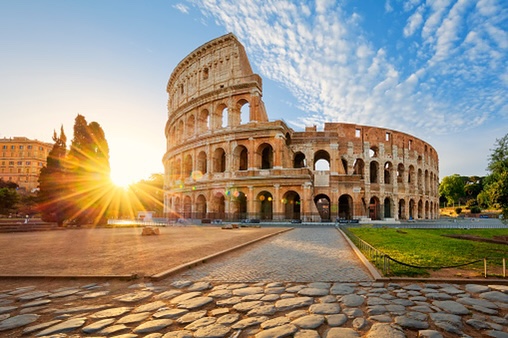
The Colosseum

Social media can be like a blood sport. Survival of the fittest. One person attacking another. With hundreds, thousands, millions looking on.

People saying things to each other that they would never say in person. And the onlookers egg them on or respond in kind. Each follower giving the proverbial thumbs up or thumbs down to express their opinion.

“Let our aim be a way of life not diametrically poised to, but better than the mob” – Seneca, Letter V, Letters from a Stoic.

Why has it become OK to do something on social media to hurt another human being just to appeal to the mob? Aren’t we better than the mob that watched the games at the Colosseum? Where has our civility gone? As I discussed in an earlier post where is civil discourse?

Social media has become an echo chamber where people find others who believe what they believe. When you only listen to those on your side you don’t learn anything new. Everyone should actively seek out those you disagree with. That’s when you learn something new.

If used differently social media can open your eyes to a whole, new world. While it may be entertaining to follow people who disparage others, the entertainment value is fleeting. While it may feel good to only follow those people who share your views, how will you ever challenge your own thinking? It is better to follow people who can teach you something.

“[R]efrain from following the example of those whose craving is for attention, not their own improvement, by doing certain things which are calculated to give rise to comment on your appearance or way of living generally.” – Seneca, Letter V, Letters from a Stoic.

Social media has brought a world of learning to your fingertips. You can learn anything from anyone. But to do so you have to be purposeful. You can’t just mindlessly scroll through your timeline. You have to actively search for individuals who challenge your worldview, those who open you up to new ideas.

Be judicious in who you follow. If someone is going to get followers at others expense than are they worthy of your time?