Beginnings

Why wait until the New Year?

Most people need an ending to have a beginning.

The end of the year is convenient.

But what about the end of the month, the week, or a day?

You don’t have to wait until the New Year to make a change.

Every minute is an ending and a beginning.

You can take this moment to do better, to be better.

Do the next right thing.

Times will be good. Times will be bad.

Life has a way of hitting you hard. It also has a way of turning around quickly.

“Happiness, of course, depends less upon our circumstances than upon our thoughts.” – 365 Promises and Prayers for Dealing with Anxiety and Fear

You have to love all of it. Amor Fati.

There is no other choice.

Enjoy this moment. Each one is a new beginning.

The Problem

All my life, I have thought that other people, things, issues, etc., were the problem.

I now realize I am the problem.

Now, that doesn’t mean that people, things, issues, etc. don’t cause issues in my life.

Even if these issues are not my fault, they are my problem.

You have no control over what happens to you.

Where you can become the problem is how you react to what happens to you.

It’s easier to blame others.

However, since we have no control over others it is impossible to fix that problem.

We do have control over what we do next.

This idea that you are the problem can be both terrifying and liberating.

If you’re the problem, you can’t blame others for the issues in your life.

If you’re the problem, then you are also the solution.

It’s the idea of taking ownership of your life that’s hard.

Are we going to make it better or worse?

I have a choice today.

I can accept what is and is not in my control and be grateful, or I can curse the world.

Either way, what is going on around me won’t change.

It is not easy.

The idea that we can make any situation better by the choices we make is freeing.

Choose wisely.

Overwhelmed

When we seek perfection in everything we do, we often feel overwhelmed.

You can’t ever be perfect so seeking it leaves you feeling inadequate.

This inadequacy can make you feel overwhelmed because no matter what you do it is never enough.

Take a step back and breathe into the moment. Then, do the next logical thing.

Many times we feel overwhelmed because we overschedule or overcommit.

The most precious commodity that we all have is time. We have to protect it.

That often means we need to say no. That is hard for many of us.

We don’t want to disappoint people. We want to be seen as helpful.

We will certainly disappoint people if we overcommit and underdeliver, and we can’t be helpful if we are overwhelmed.

I have learned that we do not control every thought that pops into our heads. But we do control our reaction to them.

We do not have to respond to them. We can let them pass like boats on the water.

If you respond to every negative thought you have, you will be overwhelmed.

When those thoughts come let them go and then remember why you are blessed.

Remembering your blessings rather than your problems will alleviate the overwhelm.

It is an impossibility not to be overwhelmed at times.

However, if you give yourself some grace, protect your time, let your negative thoughts go, and focus on the good things in your life, you will have more peace.

Flawed

I am flawed.

I struggle with perfectionism.

Perfection is an impossibility.

I saw a sign outside a school that said something to the effect of chase perfection and catch excellence.

This is the wrong message to send to students.

Chasing perfection is a fool’s errand. You will always be disappointed.

Chasing excellence is reasonable.

Chasing improvement every day is attainable.

Perfectionism causes you to take the safe path.

If you have to be perfect, you will not be willing to try and fail, which is the only way you learn or create something new.

I have spent my whole life worrying about what others think of me.

It has often led me to make poor choices to fit in.

“The big question about how people behave is whether they’ve got an Inner Scorecard or an Outer Scorecard. It helps if you can be satisfied with an Inner Scorecard.” — Warren Buffett, Sunday Thinking, The Daily Coach newsletter

Your opinion of yourself is what matters most.

Most of the time, others are not thinking of you. They are too busy thinking of themselves.

Go out there. Try and fail.

Learn something from your failure that will improve your life.

Worry about what you think of yourself not what others think about you.

Control

What is control?

Oxford Languages defines it as “the power to influence or direct people’s behavior or the course of events.”

You do not control other people or outside events.

You don’t even control your emotions.

Often your emotions are visceral reactions to what is going on around you.

“There’s no such thing as a good or bad emotion – only good or bad reactions to an emotion.” – Mark Manson, Your Next Breakthrough newsletter

What you do next, your action and reaction is where the control comes in.

It is easy to blame someone else for your actions or reactions to something that has happened.

Others do not control you unless you let them.

Often, we feel like we are in control, but we are allowing something or someone to control us.

We are always complicit in this control.

No is a powerful word.

Often we say yes because we don’t want to hurt the other person or it’s just easy.

But saying yes to one thing means we are saying no to something else.

Control is making a rational decision about what is best for you at the moment.

That is the only control we have.

Irritating or Irritable

Small, annoying stuff happens to us each and every day.

Is what happened irritating or are you irritable?

Whether it bothers you is the choice you make in interpreting what has happened.

However hard it may be the choice to be upset about what is going on is still yours.

Choose to not let it bother you and it won’t.

Now that is easier said than done.

Especially on one of those days where everything seems to be going wrong.

It may take a Herculean effort to not lose it.

“Think…how soon you and your vexations will be laid in the grave.” – Marcus Aurelius, Meditations

There is always a space between stimulus and response.

Sometimes that space may be brief but it’s there.

Breathe. Be present. Find calm.

Not everything needs an immediate response. Something’s don’t need a response at all.

If you react on emotion you will make a bad situation worse.

“Our rage and lamentations do us more harm than whatever caused our anger and grief in the first place.” – Marcus Aurelius, Meditations

Let your emotions subside then you can give a thoughtful, measured response.

Preparing to Live

“A most dangerous temptation is the temptation to prepare to live, instead of living. The future does not belong to you. Therefore, remember to live the best way you know now.” – Leo Tolstoy, A Calendar of Wisdom

We all have fallen into the trap of preparing to live.

When we get the new job, we will have it made.

When we get more money, we will take that trip.

When we retire, we will have time to spend with our families.

We all forget that the future is promised to no one.

We need to live each day to its fullest.

Now that doesn’t mean we should be reckless with our time, our money, or our life.

It means we should be intentional with what we do with them.

“Everyone hurries his life on and suffers from a yearning for the future and a weariness of the present. But he who bestows all of his time on his own needs, who plans out every day as if it were his last, neither longs for nor fears the morrow.” – Seneca

Don’t put off to tomorrow, something you need to do today.

Tomorrow may never come.

Don’t prepare to live, live every day.

Preaching

For those of us who have found the benefits of philosophy, whether it be Stoic, Christian, Buddhist, or some other tradition, we want to preach about those benefits to those around us.

We want to show people the error of their ways by showing them that we know a better way.

That strategy will fail.

When you preach and tell people where they are wrong, they shut down and stop listening.

They think you are self-righteous.

They get defensive and think you don’t understand their situation.

And you know what they’re right.

Even if it is your spouse, child, sibling, or best friend, as much as we can empathize with someone and their situation, we don’t honestly know what they are going through.

The philosophy that you found groundbreaking and helpful may fall flat for someone else.

The best thing you can do for someone else is be supportive in their journey and live by example.

The best way to show someone the benefits of your philosophy is to live it every day.

To be a positive example of what that philosophy has done in your life.

Empty words will help no one, but positive actions will.

Family

Nothing is more important than family.

They will be there in the good times and the bad.

By family, I don’t necessarily mean blood relations.

For many people, family is friends and colleagues.

I am very lucky that I have both.

My family has been there to celebrate with me during the good times and hold me up during the bad.

Whoever you call family, don’t forget to let them know how you feel about them.

One day you won’t have that opportunity again.

Good and Bad

This week, good and bad things are guaranteed to happen.

How will you deal with them?

Whatever happens, it will change sooner or later.

The key is not to get too high with the good things or too low with the bad.

Take them both in stride.

Often the good things seem to only last minutes and the bad seem to last forever.

Try to keep an even keel.

Keep putting one foot in front of the other.

“Persist and resist” – Epictetus

The key is persistence and perseverance.

Don’t let the good times blind you to the ills that may befall you.

Don’t let the bad times blind you to all the wonderful things you have in life.

Keep going. The path will change eventually.

Either way, you can make it through.

A New Journey

A new journey begins with one step.

You can be on this journey because you want change or change can be thrust upon you.

Either way you have to take that first step.

Then the next and the next.

One foot in front of the other. One moment at a time.

The road will not be straight or smooth.

You will meet obstacles.

You may go over them or through them or around them.

These obstacles may force you on a new journey.

Whatever you do keep going.

Not only keep going but do it with joy. Life is too short to be miserable.

Wait long enough, good or bad, the situation will change.

Faith

Faith is knowing that you will get to your destination even if you don’t know how you will get there.

Faith is believing in yourself even when no one else does.

Faith is fighting every day even when it is dark and scary.

It is not easy.

You will want to give up.

You may have a hard time getting out of bed.

All you can do is take it one moment at a time.

Put one foot in front of the other.

And keep going.

Moving Forward

Moving forward requires a solid taste of reality.

You will never move forward if you still think that what is gone will come back.

You have to let go of the past.

“When you let go of what you are, you become what you might be.” – The Daily Coach, Notes from an Elder newsletter

You have to be present.

You have to set new goals for the future.

You have to put one foot in front of the other and make the life that you want.

You can’t listen to the naysayers and those that don’t want you to succeed.

You have to listen to that little voice inside you that says to keep going. You have to believe.

You have to remember you are 100% getting through bad days.

It may not be the life you thought you would have but it can be the life that you never imagined.

It will not be easy. It may be scary. But it can be possible if you really believe.

Put your head down and get to work.

Happy Father’s Day

Being a father is the most important job I have.

It is not always the easy.

It is hard to lead by example.

The thing you have to remember is that you don’t have to be perfect.

Your children learn just as much from your mistakes as they do from your victories.

From your mistakes, they need to learn to pick themselves up, dust themselves off, and keep trying.

From your victories they need to learn how to win with humility and not let it go to their heads.

Whether they learn either lesson is up to you and how you handle yourself.

My favorite title in the world is Dad. Love you, Anna and Brendon.

Letting Go

This post is a companion to last week’s about wishful thinking.

Once you have gotten over your wishful thinking about how your life should work out in the future.

You have to let go.

Let go of people, places, and things that may be keeping you from being present in this moment and living the life that is right in front of you.

Holding on and wishful thinking are ways of denying reality. We may not want it to be true, but it is.

Are you strong enough to let go?

We are very good at talking ourselves into holding on. That’s wishful thinking.

Letting go can be freeing.

It can clear all the mental clutter that is holding you back.

But change is scary. What if it doesn’t work out?

Guess what you have only so much control over that anyway. Focus on what you can control.

Giving your best effort at making the most of the situation.

Turning this situation into a stepping stone, not a stumbling block.

Wishful Thinking

We all wish our lives had turned a little bit different. There’s always something we regret or wish had gone the other way.

“To be able to accept what is, we have to relinquish our hold on how we wish things to be.” – yung pueblo, lighter, p. 61

Sometimes we hold on to things because we think that is what we are supposed to do.

We should take this path because that is what is expected of us, even if it makes us miserable.

Or if we hold on to that dream just a little longer, it is bound to come true.

“Holding on is a survival tactic born out of fear and scarcity. Fear is a craving for safety.” – yung pueblo, lighter, p. 62

Sometimes the best gift we can give to ourselves is to let go of what we hoped would have or hope will happen.

This is the Buddhist idea of hopelessness. Not hoping things turned out differently but being present with how things did turn out.

The way we want things to turn out often doesn’t happen and that dream may be unattainable. We have to let go of what we thought we want, to have the future that’s out there for us.

“Since the amount of stress you experience depends on the intensity of your reaction, the only solution that is within your control is changing yourself.” – yung pueblo, lighter, p. 65

Let go. Be open to the possibilities that are in front of you. Make the obstacle the way.

“The impediment to the action advances action. What stands in the way becomes the way.” – Marcus Aurelius, Meditations, Book 5.20

Life is going to happen how it happens. We only have control over our response to what happens.

To think that we can change most outcomes. That truly is wishful thinking.

One Day At A Time

That is all we have.

Honestly, we only have this moment.

As each moment ends it becomes our past. There is nothing we can do to change it.

That doesn’t mean we shouldn’t plan for the future. We should.

We just need to understand that those plans may not turn out how we hoped.

When life throws you a curve, you have to adjust and make the best of the situation.

You do that one moment at a time. One day at a time.

My Life

This is my life. Is it the life I thought I would have a year ago? No, but that’s irrelevant. It’s the life I have.

I can be miserable and worry about all the bad things and that will not change my situation.

I can be positive and count my blessings and that will not change my situation.

I can look at the situation as the end. I can blame others. I can be angry.

I can look for the opportunity in the obstacle. I can learn about myself. I can heal.

I can take either path, but only one will make the journey easier.

Sometimes life has to teach us lessons, lessons we refuse to learn on our own.

This is one of those times.

I needed to learn humility. I needed to learn egolessness. I needed to learn what is important.

Family is important. Friends are important. Helping others is important.

Power is not important. A title is not important. What people think is not important.

Life will go on and it’s never too late to start over.

“You can still make something of this life. You can still be grateful for whatever – and how much ever – time you have left…There is no too late.” – Daily Stoic Meditations

I am grateful for life’s lessons. I am grateful for everything that has happened, good and bad. I am grateful for one more day to be better.

Dying A Little Every Moment

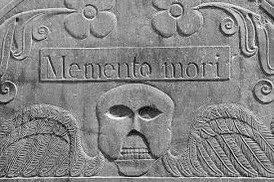
Momento Mori – meditate on death

I wrote an earlier blog post on Momento Mori, but I have been contemplating this idea again recently.

Why would anyone want to think about their own death?

Why? Because if you contemplate that you will die that is when you begin to live.

No one can predict the future which means no one knows when they will die.

It could be today. It could be 100 years from now.

There are millions of people, both young and old, that will die today. Some may know it is coming. Most do not.

That means we should live each moment to its greatest potential, not sweating the small stuff.

Each moment is a death, whereas the next moment is a birth.

“Every event of our lives has a beginning, a middle, and an end…Every day is made of countless moments, and each of these precious moments ends and becomes a past lifetime.” – Pema Chödrön, Welcome the Unwelcome

That means no matter what has just happened, you have a new moment to make it better, fix that mistake, to say you’re sorry.

“You will have the insight that there are continual and endless opportunities to have a fresh start. In each moment, one lifetime ends, and another begins.” – Pema Chödrön, Welcome the Unwelcome

It may seem hopeless. It may seem that there is no way out.

Just wait for the next minute. You are never know what is around the next corner.

Don’t give up hope.

“See everything as a passing memory.” – Trungpa Rinpoche

Remembering that you will die will help you live.

Follow Nature’s Course

“Everything has to submit to what happens, but only rational beings are given the power to follow what happens voluntarily.” – Marcus Aurelius, Meditations, Book 10.28

What is going to happen is going to happen. We have less control over the future than we think.

We can complain about it. We can get angry about it.

Your reaction will not change the outcome.

“The Fates guide the person who accepts them and hinders the person who resists them.” – Cleanthes

We only control our response, so we must accept what has happened and move on.

Use it as a learning experience. Use it as fuel to find something better, to be better.

“Oh, wretched I, to whom this mischance is happened! Nay, happy I, to whom this thing happened, I can continue without grief; neither wounded by that which is present, nor in fear of that which is to come.” Marcus Aurelius, Meditations, Book 4.44

Often the worst-case scenarios that we invent in our head never come true. We rob the joy from today by worrying about things that may never happen tomorrow.

“We suffer more in imagination than in reality.” – Seneca.

In the moment, it may feel like the end of the world. Unless it has killed you, then it’s not the end of the world. If it has killed you, then your pain is over.

If it hasn’t killed you, then use it to make you better and stronger.

Don’t quit. One foot in front of the other. One day at a time.

Acceptance

“How much wiser would it be to accept what we are given and show justice, moderation, and obedience to God, and do this in all simplicity.” – Marcus Aurelius, Meditations, Book 12.27

You have to be willing to take what you are given, good or bad. Whatever is handed to you, soldier on.

Wanting something other than what the universe has in store for you is a recipe for unhappiness.

Accept your current situation. There is no other option.

Accept that your past is over, and there is nothing you can do to change it.

“We can just try sitting with it all – our thoughts, our feelings, our perceptions – and letting everything be just as it is.” – Pema Chödrön, Welcoming the Unwelcome

Acceptance of the present and past, does not mean that you have to accept a future of misery.

If what you think you want is in the cards, it will come to you.

Be patient. Be present. Focus on what you control.

Your thoughts. Your attitudes. Your actions. How you treat other people.

You will receive exactly what you can handle and what is mean to to be for you.

Accept it.

The Journey

Life is a journey, not a destination.

I have been trying meditation and mindfulness lately. I am not very good at it.

My mind moves a million miles an hour. I have a hard time focusing on the present moment.

Guess what that’s ok. Mindfulness is a journey.

I have been working on Stoicism for three years now. I am still not very good at it.

I have a hard time focusing on what I can control. I have a hard time letting go of the past and not catastrophising the future.

Guess what that’s ok. Stoicism is a journey.

Whatever you are trying to accomplish is a journey.

Beating yourself up because you aren’t the best at something. Doesn’t help you get better.

Anne Lamott in her book on writing Bird by Bird describes writing and life like driving a car at night.

“You can see only as far as your headlights, but you can make the whole trip that way. You don’t have to see where you’re going, you don’t have to see your destination or everything you will pass along the way. You just have to see two or three feet ahead of you. This is right up there with the best advice about writing, or life, I have ever heard.”

You don’t have to have the whole journey figured out.

You have to have a destination in mind but you don’t have to see it. Focus on what is three feet ahead of you, then another three feet.

That’s how you make progress on this journey we call life. A little progress every day.

The path doesn’t have to be perfect. There will be bumps in the road and detours. Just keep moving. You will eventually get to where you want to be.

Enjoy the journey.

Our Opinions

“This never ceases to amaze me. We love ourselves above all others and yet value our opinions less than that of others.” – Marcus Aurelius, Meditations, Book 12.4

I have spent much of my life worrying about what others would think of me rather than just doing the right thing.

This mindset of seeking outside approval has led me down the wrong road on multiple occasions.

I am working on doing the right thing even when it is hard.

Some people will not like that.

That’s ok.

“Be who you are and say what you feel, because those who mind don’t matter, and those who matter don’t mind.” – Bernard Baruch

Other people’s opinions are fleeting. Some days they will love you. Some days they will hate. Most days they don’t even think about you.

“The things you think about determine the quality of your mind. Your soul takes the color of your thoughts. Color it with a run of thoughts like [this]: Anywhere you can lead your life, you can lead a good one.” – Marcus Aurelius, Meditations, Book 5.16.i

You have to live with yourself every moment of every day. Your opinion matters more.

Be the best person you can be in each moment. Believe in yourself and color your thoughts with a positive opinion of yourself.

That’s all that matters.

Anger is a Gift

“Anger is a gift.” – Rage Against the Machine, Bombtrack, rage against the machine

As a Stoic you are not supposed to feel anger. That is the biggest misconception about Stoicism, with a big S, compared to stoic, with a little s.

stoic – not affected by or showing passion or feeling – Miriam-Webster definition

Stoic philosophers did not believe that you should not feel emotions. They believed that you should be in control of your emotions at all times.

You can feel anger, love, and sadness. Every emotion you have, at any time.

But then what?

“That it’s not what they do that bothers us: that’s a problem for their minds, not ours. It’s our misperceptions. Discard them. Be willing to give up thinking of this as a catastrophe…and your anger is gone.” – Marcus Aurelius, Meditations, Book 11.18.vii

You have to domesticate those emotions. You can not let other’s actions rule your response. You have to use your emotions to your advantage.

Use any emotion, especially anger, to get better, to work harder, to learn more about yourself.

Rage is the dangerous emotion. Rage is out of control. Rage will make the situation worse.

Anger can be used to your advantage if you separate it from the situation.

Sometimes people need to know you are angry. It gets their attention, but it must be used in a measured way.

Anger can get your point across. It can drive you to improve.

Anger is a gift.

Failure

What is worse failing or the regret from not trying?

In the moment, failing feels worse.

Failure, as long as you give everything, should never lead to regret.

Not trying always leads to regret.

The what ifs. What if I had succeeded? What if things had gone my way?

How do you know you would have failed if you haven’t tried?

To me regret is worse. You just don’t know what would have happened.

If you fail, you have the information to learn the next time.

No matter how old you are the story is never written.

As long as you are above the soil you have time to do great things.

You will fail.

Dust yourself off, learn from it, and keep going.

Living for Today

When life is easy, we tend to forget that tomorrow is not guaranteed to anyone.

We may live for another 50 years or for another 50 seconds.

Bad stuff happens. Car accident, heart attack, random act of violence. No one knows.

That doesn’t mean we should live recklessly. It just means we should savor the present moment.

No regrets is a coward’s motto. We all have regrets. It’s what we do with them that matters.

We have to stop worrying about past mistakes. We would all like to be perfect and not have done dumb shit in our life. That’s an impossibility.

Mistakes will be made. Some of them will be HUGE, life altering. Then what?

“You just do it. You force yourself to get up. You force yourself to put one foot in front of the other, and God damn it, you refuse to let it get to you. You fight. You cry. You curse. Then you go about the business of living.” – Elizabeth Taylor

You may post your best self on social media. But what about the days you can barely get out of bed?

Guess what? No matter how good your life is, we all have bad days.

We should prepare ourselves for what may happen. Premeditatio Malorum. But not worry about what outcome may actually happen.

“We suffer more in imagination than in reality. “ – Seneca

We spend too much time worrying about a future that we are horrible at predicting.

Live in the present moment Because that is all we have.

“At dawn, when you have trouble getting out of bed, tell yourself: “I have to go to work — as a human being. What do I have to complain of, if I’m going to do what I was born for — the things I was brought into the world to do? Or is this what I was created for? To huddle under the blankets and stay warm?” – Marcus Aurelius, Meditations

It does not have to be a great day. It just has to be a day. Just get up and live it.

You don’t have to take the 30,000 foot view. My mom on once said to me during a difficult time get through the next 10 minutes, then the next 10 minutes.

Remember it is a privilege to be above the soil. There are more people than you can imagine who are breathing their last breath at this very moment.

Do not waste a moment that you still have breath.

If you have life be thankful. No matter your situation.

“Nature brings what is good for everyone and everything, and at the precise moment.” – Marcus Aurelius, Meditations

Life provides you with what you need if you are willing to accept it. It may look like an obstacle or bad luck, but that may disguise the opportunity.


Thank You

In What Got You Here, Won’t Get You There, Marshall Goldsmith recommends when you receive feedback, positive or negative, all you should say is Thank You.

First it is disarming. Most people, when they provide feedback, expect an argument. Just listen to what they have to say and say Thank You.

Second receiving feedback can be emotional, especially negative feedback. It’s better to just listen, take it in, and say Thank You.

There is no need to debate every point. There is no need to offer an opinion in every conversation.

You don’t have to agree with everything that’s said but usually some of what is said is true.

Feedback is difficult to hear because we see ourselves one way, where the world sees us another. Say Thank You then sit down and reflect on what was said.

Take what you can use to get better, discard the rest.

Keep going back to anyone who has the courage to give you feedback, especially negative feedback. Check in with them to see how you are doing and say Thank You.

Don’t be right. Get it right. And say Thank You.

Amor Fati

Amor Fati means love one’s fate.

Friedrich Nietzsche created the idea.

“That one wants nothing to be different, not forward, not backwards, not in all eternity. Not merely bear what is necessary, still less conceal it….but love it.” – Friedrich Nietzsche
When life is going good Amor Fati is easy. All’s good. No reason to regret anything. Loving life.

When life starts throwing challenges at you that’s when Amor Fati becomes difficult.

But if you read Nietzsche’s quote carefully he doesn’t say love your fate when it’s easy. He says “one wants nothing to be different.”

Everything happens for a reason. We may not be able to see or comprehend it at the time, but the reason is there.

Bad things will happen. That’s inevitable. Why try to pretend they won’t?

We would all love life to go our way all the time. That’s not reality.

“Do not seek for things to happen the way you want them to; rather, wish that what happens happen the way it happens: then you will be happy.” – Epictetus

As much as we try, we do not control what happens to us. We only control our response to what happens.

Why be miserable? It is what it is, and it will be what it will be.

Life is too short not to love that you are alive.

Every day is a gift. Even the bad ones.

Longing

Longing for what?

Days gone by? That may or may not have been so great.

Or a future of greatness? That may or may not come true.

Too much of the first brings on depression of things you cannot change.

Too much of the second brings on anxiety of things you cannot control.

You need to let go of who you were so that you can become who you want to be.

Longing is not a bad thing. It can be the driver to make your life better.

It can be the driver to create the goals that move you forward in life.

Long to be better each day. Long to be more humble. Long to be more empathetic. Long to be more wise. Long to be more understanding.

“Waste no more time arguing what a good man should be, be one.” -Marcus Aurelius, Meditations, X.16

Focus on making your life better, by being better. Not on external factors that you cannot control.

“There is only one way to happiness and that is to cease worrying about things that are beyond the power of our will.” – Epictetus, Enchidrion, 1

When Is It Enough

“For men in a state of freedom had thatch for their shelter, while slavery dwells beneath marble and gold.” – Seneca, Letters from a Stoic, Letter XC

We are all chasing more “marble and gold” but in that chase we are less free. The simpler life is freeing.

We are tethered to devices that make us accessible 24/7/365. We can’t spend 5 minutes with our own thoughts without reaching for our phones.

We complicate our own lives. Rather than living simply we chase things that are unnecessary: likes, comments, etc.

The shot of dopamine is too enticing.

“We were born into a world in which things were ready to our hands; it is we who have made everything difficult to come by through our own disdain for what is easily come by.” – Seneca, Letters from a Stoic, Letter XC

We complicate our own lives. Rather than being happy with what we have, we want more.

More what?

“[T]o want simply what is enough nowadays suggest to people primitiveness and squalor.” – Seneca, Letters from a Stoic, Letter XC

We need to learn to be happy with what we have, not always searching for what we don’t.

That doesn’t mean you shouldn’t have goals or aspirations. We need to learn to be patient and to be satisfied with what we have now.

You are enough. You don’t need to impress people. You don’t need to have a million followers.

If you are pursuing your best life that is enough. Set goals for your self. Take calculated risks. Some will pan out others won’t.

That’s ok. Life is about trying new things, growing from our mistakes. It’s about being the best version of yourself.

Just as you are, you are enough.

Complaints

Complaining has become so engrained in our culture it is almost second nature.

The difference between complaining and pointing out problems is your willingness to do something about it.

Many people are unwilling to do the hard work to fix what is broken. It is just easier to complain and hope that someone else will come along and fix it.

“Don’t be overheard complaining … Not even to yourself.” – Marcus Aurelius

But if no one is willing to step up, how will anything change?

It takes courage to be willing to put yourself out there to change something for the better. It is the natural reaction of every human being to resist change.

Change is hard. Change is scary. The status quo is comfortable. But what if the status quo is not working?

In our society it hasn’t just become status quo to complain but to attack anyone willing to step up to fix a problem. We have become close minded to the possibility that we may not have all the answers.

When did it become passé to help a friend, a neighbor, hell, even a stranger. Now we’d rather just complain about THEIR problems behind their back.

How do we turn this ship around?

We need to become more compassionate, more forgiving of the mistakes of others.

Use the energy you use to complain to find a solution. Every problem has a solution. It may not be quick. It may not be easy. But it’s out there if you look for it.

“It is not the critic who counts; not the man who points out how the strong man stumbles, or where the doer of deeds could have done them better. The credit belongs to the man who is actually in the arena, whose face is marred by dust and sweat and blood; who strives valiantly …and who at the worst, if he fails, at least fails while daring greatly, so that his place shall never be with those cold and timid souls who neither know victory nor defeat.” – Theodore Roosevelt

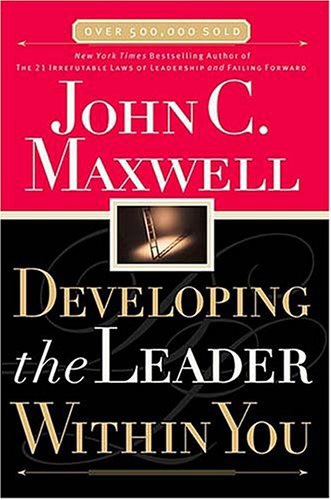
Book Review: Developing the Leader within You by John Maxwell

The past two years have been difficult to say the least. It doesn’t matter what your position is in your school district, your leadership has been challenged. You have probably not only questioned your own abilities. You have questioned your future in education. I know both of those doubts have crept into my own thinking. In times like these you need a reminder of why you do what you do and how best to accomplish your mission as a leader

Developing the Leader within You was that reminder for me. Whether you are an aspiring leader, a leader with a few years under your belt, or have held leadership positions for decades, this book can provide you with a renewed perspective on why you do what you do and how to do it better. John Maxwell takes the perspectives of leaders from all walks of life and provides his own fresh insights to inspire you to not just manage your organization but lead your people.

The underlying premise of the book is that influence is the cornerstone of leadership. You cannot be a leader without followers. You cannot have followers if you don’t have influence. To gain influence you must “communicate effectively. This leads to recognition and recognition in turn leads to influence” (p. 5). The chapters in the book provide you with the awareness into the ideas that help you grow your influence with your followers.

These ideas resonated with me the most:

  • Priorities – During the pandemic our priorities have been skewed to fighting fires rather than furthering our mission. This chapter was a great reminder that we have to set our own priorities and not let them be influenced by outside forces. “All good leaders have learned to say no to the good in order to say yes to the best” (p. 32).
  • Integrity – We have all had to make difficult, often unpopular decisions, during the pandemic. Integrity is what leads us all to make those difficult decision for the greater good, even in the face of severe criticism. “The measure of a man’s real character is what he would do if he would never be found out. – Thomas Macauley” (p. 43).
  • Creating Positive Change – Things have changed over the last two years. We were forced into making changes that we may not have made without the situation at hand. One of the biggest issues in education is the snail’s pace at which positive change occurs. We have to learn from the recent past to continue moving education forward without being forced to by our circumstances. “Elbert Hubbard said that the greatest mistake a person can make is to be afraid of making one” (p. 58).
  • Problem Solving – There has never been a more important skill right now. Problems are thrust upon us on a daily basis. Problems that demand solutions. As leaders it is our responsibility to empower others to solve problems for themselves. “Problems should be solved at the lowest level possible, because that is where they appear” (p. 91).
  • Attitude – There is an old saying that attitude will determine your altitude. Moping, whining, crying out about the unfairness of things will not solve the problem at hand. It will only make you feel worse, and you still have to deal with whatever you are going through. “God chooses what we go through. We choose how we go through it” (p. 105).

This book gave me a renewed understanding of why I do what I do and how I can do it better. I got into education to make a difference in the lives of young people. They, more than any of us, have struggled to find their footing through these challenging times. We must always remember that every decision that we make has a direct impact on the students. Therefore it is imperative that we recapture our why and push forward with helping our children become good citizens of this challenging world.

Originally published American Association of School Personnel Administrators Blog

You can’t force children to learn.

“[Y]ou can’t force kids to learn. You can only inspire them to do so.” – David Perrell, Monday Musings, 8/17/20

Why do we continue to try to force children to learn?

We can blame state testing, but that is a cop out. It’s been going on since I was in HS. I grew up in an era where the only high stakes testing was the SAT.

I grew up hating English class. I disliked reading and writing. I came to realize that I hated reading and writing what the teacher wanted me to read and write.

I remember only one project in HS English. We had to do a poetry study. We could choose anyone we wanted. I chose Jim Morrison, partly out of being a smart ass. “I’m going to show her. No stuffy poets for me.” But also because I love music. There is not a day in my life that I don’t listen to music for at least 1 to 2 hours.

The book I used was Wilderness: The Lost Writings of Jim Morrison. What I realized during the project was that I really didn’t hate poetry. I hated the poets that we were required to read.

It was English for me, but it is another subject for someone else. The point is that unless we try to get students personally involved in the content they will shut us out in subjects that they don’t like.

Personalizing your course content is not easy. It requires much more planning, and is much more difficult to execute. But isn’t the payoff worth it?

We all feel our content is important, and it is. We all get upset when students blow off our work. If we want students to work within our content areas we have to help them see the usefulness of what we teach.

It is important that students learn how to think differently. Tackling a problem scientifically is different that tackling it mathematically or historically. The problems aren’t getting easier so being able to approach them from many different angles will be important to solving them.

So if students blow off your class because they are not interested then how are you helping them develop their problem solving skills?

Powerful Learning First, Technology Second

This is the title of chapter 9 in George Couros’s book The Innovator’s Mindset. Many people feel that technology is the answer. The answer to inequity. The answer to reopening schools. I disagree. Technology is a tool. How we use technology is part of the answer.
“Giving kids iPads or allowing them to film homework assignments on YouTube prepares them for the high-technology economy about as much as playing with Hot Wheels would prepare them to thrive as auto mechanics. “ – Cal Newport, Deep Work

We have to get away from using iPads, Chromebooks, laptops, etc. as expensive replacements for the worksheets many teachers rely on. This is where the powerful learning comes in. We, as educators, have to design experiences that allow students to think critically, collaborate, and create. Even more powerful than that, let the students design the learning experiences.

“And yet educators at schools where personalized learning is viewed as an overarching philosophy, rather than a digital panacea, say that adapting to the pandemic has been relatively painless, and that students are continuing to progress in their studies. The key difference between their approach and the popular narrative around personalized learning is that these educators have built their schools around the idea of student agency.” – Ainsley Harris, “Learning Gets Personal,” Fast Company, September 2020.

We have no choice but to give students more freedom in their learning. Students will be home either every day, three times per week, or every other day for at least the near future. We cannot assume that how we engaged students before will work now. In many cases what we were doing before wasn’t working any way.

We need to leverage the technology to make education better. We have to teach students to be creators. For that to happen our teachers need to be creators. It’s not enough that they move their PowerPoints to Google and provide a Form at the end of the lesson as an assessment. We need to fundamentally rethink what and how we educate our students.

We have an opportunity to remake education, so that our students now and in the future come out of this stronger, not weaker than before. Powerful Learning before technology.

Empowerment

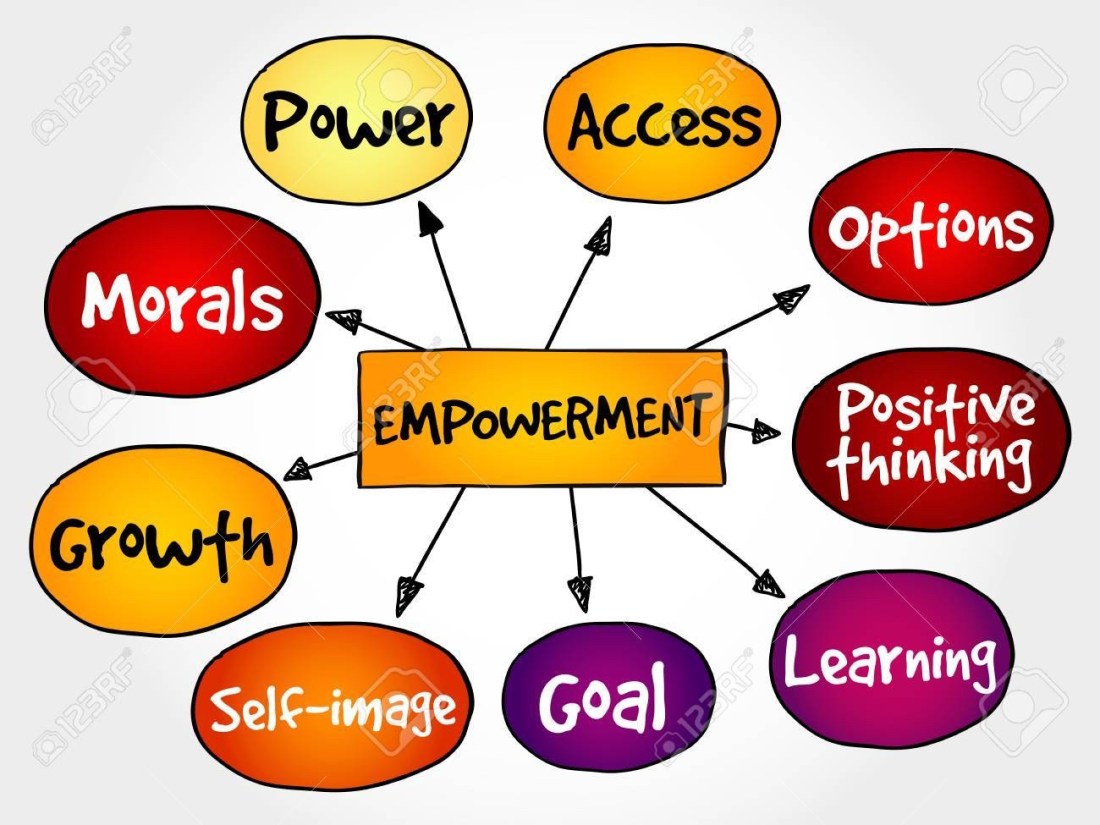
All three of the ideas I have spoken about in my last three blog posts, passion, inquiry, and understanding, have brought me to this final idea of empowerment. Wouldn’t now be the right time to empower teachers and students to remake education into what it could and should be?

You might say: Now? The right time? With all the uncertainty? Well there never is a right time. We always wait until the right time, but it never comes. We push things off because it’s not the right time, and then guess what nothing ever happens. But isn’t now as good a time as any?

Uncertainty is the rule, not the exception. It’s how we respond to the uncertainty that matters. That is a major tenet of Stoicism. We need to make teachers and students feel safe in taking risks in adjusting their teaching and learning in response to this uncertainty.

Whether we are in schools or in remote learning, the only people who really know what is going on in any classroom are the teacher and the students. Shouldn’t we empower them to make the decisions that are best for them?

We must allow them to use their passions to make classrooms and learning relevant. Empower them to look at curriculum through their lens and make adjustments that personalize the learning to them.

“Working hard for something we don’t care about is called stress; working hard for something we love is called passion.” – Simon Sinek via The Innovator’s Mindset by George Couros

We also must encourage our teachers and students to question everything. Powerful questions are what drives innovation in any industry. Teachers and students should be asking questions that further their own teaching and learning. They are at the ground level of what can be done to make our classrooms, either virtual or in person, better.

“You don’t have to hold a position of authority to ask a powerful question.” – Polly Le Barre via A More Beautiful Question by Warren Berger

If teachers and students are encouraged to us their passions and ask their own questions, they will develop a deeper understanding of whatever they are studying. They can use that understanding to push education forward toward what we envision: equity in opportunities for all children. They will also be happier in the process. What will you do this year to empower teachers and students to make education better?

“I encourage you to commit to empowering the people you serve to be part of the process of finding and solving problems.” – George Couros, The Innovator’s Mindset