Beginnings

Why wait until the New Year?

Most people need an ending to have a beginning.

The end of the year is convenient.

But what about the end of the month, the week, or a day?

You don’t have to wait until the New Year to make a change.

Every minute is an ending and a beginning.

You can take this moment to do better, to be better.

Do the next right thing.

Times will be good. Times will be bad.

Life has a way of hitting you hard. It also has a way of turning around quickly.

“Happiness, of course, depends less upon our circumstances than upon our thoughts.” – 365 Promises and Prayers for Dealing with Anxiety and Fear

You have to love all of it. Amor Fati.

There is no other choice.

Enjoy this moment. Each one is a new beginning.

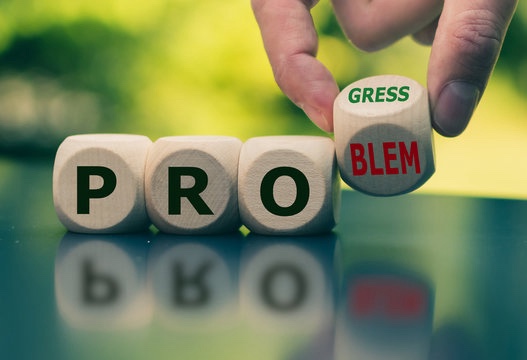
The Problem

All my life, I have thought that other people, things, issues, etc., were the problem.

I now realize I am the problem.

Now, that doesn’t mean that people, things, issues, etc. don’t cause issues in my life.

Even if these issues are not my fault, they are my problem.

You have no control over what happens to you.

Where you can become the problem is how you react to what happens to you.

It’s easier to blame others.

However, since we have no control over others it is impossible to fix that problem.

We do have control over what we do next.

This idea that you are the problem can be both terrifying and liberating.

If you’re the problem, you can’t blame others for the issues in your life.

If you’re the problem, then you are also the solution.

It’s the idea of taking ownership of your life that’s hard.

Are we going to make it better or worse?

I have a choice today.

I can accept what is and is not in my control and be grateful, or I can curse the world.

Either way, what is going on around me won’t change.

It is not easy.

The idea that we can make any situation better by the choices we make is freeing.

Choose wisely.

Overwhelmed

When we seek perfection in everything we do, we often feel overwhelmed.

You can’t ever be perfect so seeking it leaves you feeling inadequate.

This inadequacy can make you feel overwhelmed because no matter what you do it is never enough.

Take a step back and breathe into the moment. Then, do the next logical thing.

Many times we feel overwhelmed because we overschedule or overcommit.

The most precious commodity that we all have is time. We have to protect it.

That often means we need to say no. That is hard for many of us.

We don’t want to disappoint people. We want to be seen as helpful.

We will certainly disappoint people if we overcommit and underdeliver, and we can’t be helpful if we are overwhelmed.

I have learned that we do not control every thought that pops into our heads. But we do control our reaction to them.

We do not have to respond to them. We can let them pass like boats on the water.

If you respond to every negative thought you have, you will be overwhelmed.

When those thoughts come let them go and then remember why you are blessed.

Remembering your blessings rather than your problems will alleviate the overwhelm.

It is an impossibility not to be overwhelmed at times.

However, if you give yourself some grace, protect your time, let your negative thoughts go, and focus on the good things in your life, you will have more peace.

Flawed

I am flawed.

I struggle with perfectionism.

Perfection is an impossibility.

I saw a sign outside a school that said something to the effect of chase perfection and catch excellence.

This is the wrong message to send to students.

Chasing perfection is a fool’s errand. You will always be disappointed.

Chasing excellence is reasonable.

Chasing improvement every day is attainable.

Perfectionism causes you to take the safe path.

If you have to be perfect, you will not be willing to try and fail, which is the only way you learn or create something new.

I have spent my whole life worrying about what others think of me.

It has often led me to make poor choices to fit in.

“The big question about how people behave is whether they’ve got an Inner Scorecard or an Outer Scorecard. It helps if you can be satisfied with an Inner Scorecard.” — Warren Buffett, Sunday Thinking, The Daily Coach newsletter

Your opinion of yourself is what matters most.

Most of the time, others are not thinking of you. They are too busy thinking of themselves.

Go out there. Try and fail.

Learn something from your failure that will improve your life.

Worry about what you think of yourself not what others think about you.

Control

What is control?

Oxford Languages defines it as “the power to influence or direct people’s behavior or the course of events.”

You do not control other people or outside events.

You don’t even control your emotions.

Often your emotions are visceral reactions to what is going on around you.

“There’s no such thing as a good or bad emotion – only good or bad reactions to an emotion.” – Mark Manson, Your Next Breakthrough newsletter

What you do next, your action and reaction is where the control comes in.

It is easy to blame someone else for your actions or reactions to something that has happened.

Others do not control you unless you let them.

Often, we feel like we are in control, but we are allowing something or someone to control us.

We are always complicit in this control.

No is a powerful word.

Often we say yes because we don’t want to hurt the other person or it’s just easy.

But saying yes to one thing means we are saying no to something else.

Control is making a rational decision about what is best for you at the moment.

That is the only control we have.

Irritating or Irritable

Small, annoying stuff happens to us each and every day.

Is what happened irritating or are you irritable?

Whether it bothers you is the choice you make in interpreting what has happened.

However hard it may be the choice to be upset about what is going on is still yours.

Choose to not let it bother you and it won’t.

Now that is easier said than done.

Especially on one of those days where everything seems to be going wrong.

It may take a Herculean effort to not lose it.

“Think…how soon you and your vexations will be laid in the grave.” – Marcus Aurelius, Meditations

There is always a space between stimulus and response.

Sometimes that space may be brief but it’s there.

Breathe. Be present. Find calm.

Not everything needs an immediate response. Something’s don’t need a response at all.

If you react on emotion you will make a bad situation worse.

“Our rage and lamentations do us more harm than whatever caused our anger and grief in the first place.” – Marcus Aurelius, Meditations

Let your emotions subside then you can give a thoughtful, measured response.

Preparing to Live

“A most dangerous temptation is the temptation to prepare to live, instead of living. The future does not belong to you. Therefore, remember to live the best way you know now.” – Leo Tolstoy, A Calendar of Wisdom

We all have fallen into the trap of preparing to live.

When we get the new job, we will have it made.

When we get more money, we will take that trip.

When we retire, we will have time to spend with our families.

We all forget that the future is promised to no one.

We need to live each day to its fullest.

Now that doesn’t mean we should be reckless with our time, our money, or our life.

It means we should be intentional with what we do with them.

“Everyone hurries his life on and suffers from a yearning for the future and a weariness of the present. But he who bestows all of his time on his own needs, who plans out every day as if it were his last, neither longs for nor fears the morrow.” – Seneca

Don’t put off to tomorrow, something you need to do today.

Tomorrow may never come.

Don’t prepare to live, live every day.

Preaching

For those of us who have found the benefits of philosophy, whether it be Stoic, Christian, Buddhist, or some other tradition, we want to preach about those benefits to those around us.

We want to show people the error of their ways by showing them that we know a better way.

That strategy will fail.

When you preach and tell people where they are wrong, they shut down and stop listening.

They think you are self-righteous.

They get defensive and think you don’t understand their situation.

And you know what they’re right.

Even if it is your spouse, child, sibling, or best friend, as much as we can empathize with someone and their situation, we don’t honestly know what they are going through.

The philosophy that you found groundbreaking and helpful may fall flat for someone else.

The best thing you can do for someone else is be supportive in their journey and live by example.

The best way to show someone the benefits of your philosophy is to live it every day.

To be a positive example of what that philosophy has done in your life.

Empty words will help no one, but positive actions will.

Good and Bad

This week, good and bad things are guaranteed to happen.

How will you deal with them?

Whatever happens, it will change sooner or later.

The key is not to get too high with the good things or too low with the bad.

Take them both in stride.

Often the good things seem to only last minutes and the bad seem to last forever.

Try to keep an even keel.

Keep putting one foot in front of the other.

“Persist and resist” – Epictetus

The key is persistence and perseverance.

Don’t let the good times blind you to the ills that may befall you.

Don’t let the bad times blind you to all the wonderful things you have in life.

Keep going. The path will change eventually.

Either way, you can make it through.

A New Journey

A new journey begins with one step.

You can be on this journey because you want change or change can be thrust upon you.

Either way you have to take that first step.

Then the next and the next.

One foot in front of the other. One moment at a time.

The road will not be straight or smooth.

You will meet obstacles.

You may go over them or through them or around them.

These obstacles may force you on a new journey.

Whatever you do keep going.

Not only keep going but do it with joy. Life is too short to be miserable.

Wait long enough, good or bad, the situation will change.

Faith

Faith is knowing that you will get to your destination even if you don’t know how you will get there.

Faith is believing in yourself even when no one else does.

Faith is fighting every day even when it is dark and scary.

It is not easy.

You will want to give up.

You may have a hard time getting out of bed.

All you can do is take it one moment at a time.

Put one foot in front of the other.

And keep going.

Drawing

When I was a kid I loved to draw and paint. I took art lessons for several years.

I’m no Picasso, but I enjoyed it.

I eventually stopped. I guess I got involved in other things that in my mind became more important.

Recently my parents sent me a sketchbook and a drawing kit.

When I sat down to draw I fell in love all over again.

When I draw, I lose myself in it. Whatever may be troubling me fades into the background, and my mind becomes more peaceful.

The same thing happens when I write.

All my troubles fade from my consciousness.

It is about being present. It easier to be present when you are doing something you love.

We all must learn to be present in everything we do.

Drawing and writing are my training grounds for presence.

I’m no expert in presence. I can find a million reasons not to draw and write or to be distracted from the task at hand.

I’m getting better. I’m a work in progress.

I would recommend you find something you can lose yourself in to train your mind to be present.

Your whole life will benefit.

Moving Forward

Moving forward requires a solid taste of reality.

You will never move forward if you still think that what is gone will come back.

You have to let go of the past.

“When you let go of what you are, you become what you might be.” – The Daily Coach, Notes from an Elder newsletter

You have to be present.

You have to set new goals for the future.

You have to put one foot in front of the other and make the life that you want.

You can’t listen to the naysayers and those that don’t want you to succeed.

You have to listen to that little voice inside you that says to keep going. You have to believe.

You have to remember you are 100% getting through bad days.

It may not be the life you thought you would have but it can be the life that you never imagined.

It will not be easy. It may be scary. But it can be possible if you really believe.

Put your head down and get to work.

Happy Father’s Day

Being a father is the most important job I have.

It is not always the easy.

It is hard to lead by example.

The thing you have to remember is that you don’t have to be perfect.

Your children learn just as much from your mistakes as they do from your victories.

From your mistakes, they need to learn to pick themselves up, dust themselves off, and keep trying.

From your victories they need to learn how to win with humility and not let it go to their heads.

Whether they learn either lesson is up to you and how you handle yourself.

My favorite title in the world is Dad. Love you, Anna and Brendon.

Letting Go

This post is a companion to last week’s about wishful thinking.

Once you have gotten over your wishful thinking about how your life should work out in the future.

You have to let go.

Let go of people, places, and things that may be keeping you from being present in this moment and living the life that is right in front of you.

Holding on and wishful thinking are ways of denying reality. We may not want it to be true, but it is.

Are you strong enough to let go?

We are very good at talking ourselves into holding on. That’s wishful thinking.

Letting go can be freeing.

It can clear all the mental clutter that is holding you back.

But change is scary. What if it doesn’t work out?

Guess what you have only so much control over that anyway. Focus on what you can control.

Giving your best effort at making the most of the situation.

Turning this situation into a stepping stone, not a stumbling block.

Wishful Thinking

We all wish our lives had turned a little bit different. There’s always something we regret or wish had gone the other way.

“To be able to accept what is, we have to relinquish our hold on how we wish things to be.” – yung pueblo, lighter, p. 61

Sometimes we hold on to things because we think that is what we are supposed to do.

We should take this path because that is what is expected of us, even if it makes us miserable.

Or if we hold on to that dream just a little longer, it is bound to come true.

“Holding on is a survival tactic born out of fear and scarcity. Fear is a craving for safety.” – yung pueblo, lighter, p. 62

Sometimes the best gift we can give to ourselves is to let go of what we hoped would have or hope will happen.

This is the Buddhist idea of hopelessness. Not hoping things turned out differently but being present with how things did turn out.

The way we want things to turn out often doesn’t happen and that dream may be unattainable. We have to let go of what we thought we want, to have the future that’s out there for us.

“Since the amount of stress you experience depends on the intensity of your reaction, the only solution that is within your control is changing yourself.” – yung pueblo, lighter, p. 65

Let go. Be open to the possibilities that are in front of you. Make the obstacle the way.

“The impediment to the action advances action. What stands in the way becomes the way.” – Marcus Aurelius, Meditations, Book 5.20

Life is going to happen how it happens. We only have control over our response to what happens.

To think that we can change most outcomes. That truly is wishful thinking.

One Day At A Time

That is all we have.

Honestly, we only have this moment.

As each moment ends it becomes our past. There is nothing we can do to change it.

That doesn’t mean we shouldn’t plan for the future. We should.

We just need to understand that those plans may not turn out how we hoped.

When life throws you a curve, you have to adjust and make the best of the situation.

You do that one moment at a time. One day at a time.

My Life

This is my life. Is it the life I thought I would have a year ago? No, but that’s irrelevant. It’s the life I have.

I can be miserable and worry about all the bad things and that will not change my situation.

I can be positive and count my blessings and that will not change my situation.

I can look at the situation as the end. I can blame others. I can be angry.

I can look for the opportunity in the obstacle. I can learn about myself. I can heal.

I can take either path, but only one will make the journey easier.

Sometimes life has to teach us lessons, lessons we refuse to learn on our own.

This is one of those times.

I needed to learn humility. I needed to learn egolessness. I needed to learn what is important.

Family is important. Friends are important. Helping others is important.

Power is not important. A title is not important. What people think is not important.

Life will go on and it’s never too late to start over.

“You can still make something of this life. You can still be grateful for whatever – and how much ever – time you have left…There is no too late.” – Daily Stoic Meditations

I am grateful for life’s lessons. I am grateful for everything that has happened, good and bad. I am grateful for one more day to be better.

Hope v. Hopelessness

I have been a Christian all of my life. I began to study Stoicism 3 years ago. In the last two months I have begun study Buddhism.

Three traditions founded on different ideals but all following similar universal truths.

Hope – a feeling of expectation and desire for a certain thing to happen. Oxford Languages

Hopelessness – a feeling or state of despair. Oxford Languages

It would seem obvious that no one would want hopelessness and everyone would want hope.

But is it so obvious?

Christians define hope as the belief that God will deliver what he has promised, everlasting life.

“We rejoice in our sufferings, knowing that suffering produces endurance, and endurance produces character, and character produces hope, and hope does not put us to shame, because God’s live has been poured into our hearts through the Holy Spirit who has been given to us.” Romans 5:3-5

As seen in the above Scripture hope is not easy. It is built on suffering and endurance.

Hope is not focused on worldly issues. We must turn over whatever happens to us to God in the hope of everlasting life

Buddhists define hopelessness as wanting nothing other than what is happening in the present moment.

“But if we totally experience hopelessness, giving up all hope of alternatives to the present moment, we can have a joyful relationship with our lives, an honest, direct relationship, one that no longer ignores the reality of impermanence and death.” – Pema Chödrön, When Things Fall Apart

Hopelessness is not about despair. It is about being present and not wishing that things turned out differently.

It is about focusing on what is in front of you with an openness to the possibilities.

Stoicism tells us to focus on what we can control.

We control our emotions and our reactions. We don’t control what happens to us.

When looking at these three ideals, I feel the key is to have hope that tomorrow will be better than today. To live with hopelessness that this moment is what your life was meant to be no matter what is happening. To do this, we need to focus on what we can control and not get caught up in what has happened to us.

Follow Nature’s Course

“Everything has to submit to what happens, but only rational beings are given the power to follow what happens voluntarily.” – Marcus Aurelius, Meditations, Book 10.28

What is going to happen is going to happen. We have less control over the future than we think.

We can complain about it. We can get angry about it.

Your reaction will not change the outcome.

“The Fates guide the person who accepts them and hinders the person who resists them.” – Cleanthes

We only control our response, so we must accept what has happened and move on.

Use it as a learning experience. Use it as fuel to find something better, to be better.

“Oh, wretched I, to whom this mischance is happened! Nay, happy I, to whom this thing happened, I can continue without grief; neither wounded by that which is present, nor in fear of that which is to come.” Marcus Aurelius, Meditations, Book 4.44

Often the worst-case scenarios that we invent in our head never come true. We rob the joy from today by worrying about things that may never happen tomorrow.

“We suffer more in imagination than in reality.” – Seneca.

In the moment, it may feel like the end of the world. Unless it has killed you, then it’s not the end of the world. If it has killed you, then your pain is over.

If it hasn’t killed you, then use it to make you better and stronger.

Don’t quit. One foot in front of the other. One day at a time.

Deep Work for Educational Leaders

Our attention is fragmented. There are a million things that are trying to grab our attention. We all have attention deficits at the moment.

When our minds are fragmented, when everything looks important, then nothing is important.

Deep Work by Cal Newport provides some insights into how to get our most important work done.

Cal’s webpage describes him as “an MIT-trained computer science professor at Georgetown University who also writes about the intersections of technology, work, and the quest to find depth in an increasingly distracted world.”

“To succeed you have to produce the absolute best stuff you’re capable of producing – a task that requires depth.” p. 13

No one can tell you what your important work is. It depends on your job, your building, and your district. However, every educational leader has important work that they know needs to get done.

“Who you are, what you think, feel, and do, what you love – is the sum of what you focus on.” p. 77

As educational leaders our attention is always being diverted from this important work. Phone calls, text messages, emails, visitors, etc. are a constant distraction every day. How do we find the time and peace to focus on what is really important?

“Clarity about what matters provides clarity about what does not” p. 62

We all need to do some soul searching to identify what matters most. When you know what matters, you will also know what doesn’t matter; then, you will know what your most important work is.

How do we find the time to do high quality work?

“Decide in advance what you’re going to do with every minute of your workday.” p. 227

Timebox your calendar. Schedule everything. Schedule certain tasks at the same time every day. It doesn’t matter what the task is or when you schedule it, but make it a routine part of your day.

“The key to developing a deep work habit is to move beyond good intentions and add routines and rituals to your working life designed to minimize the amount of your limited willpower necessary to transition into and maintain a state of unbroken concentration.” p. 100

Find a specific time each day to respond to email and phone calls. Block out times on your calendar when you are unavailable. Make sure that everyone who works closely with you knows that this time is sacred, and you should only be interrupted if there is a true emergency.

When you know when you are less likely to be interrupted is an excellent time to schedule the deep, meaningful work. What is scheduled is what is important and what gets done.

“To master the art of deep work, therefore, you must take back control of your time and attention from the many diversions that attempt to steal them.” p. 182

We are all like Pavlov’s dog, but rather than a bell, we respond to every ding from our devices. Our brains are not meant to multitask.

“A study by the University of California, Irvine found that it takes an average of 23 minutes and 15 seconds to get yourself back on track after being interrupted. This means that even if you’re lucky enough to get distracted only a few times a day, you lose an hour of work!” – How to Get Back on Track When You Get Distracted at Work

“When you notice your attention slipping away from the problem at hand, gently remind yourself that you can return to that thought later, then redirect your attention back.” p.172

Keep a notebook, a Google or Word Doc, a Note in your phone open to jot down those invading thoughts.

Your mind is for having ideas, not holding them.” – David Allen, Getting Things Done

“To work deeply is a big deal and should not be an activity undertaken lightly” p. 121

It is ok to be unavailable at times. It is ok to only respond to emails and phone calls at specific times of the day. It is ok to silence the notifications on your phone or put it on do not disturb. It is ok to shut the door for a specific amount of time to concentrate on what matters.

We have to learn to say no. Not every “crisis” needs our immediate attention or our attention at all. Someone else’s emergency is not necessarily ours.

You don’t have to be superhuman to get the important work done. You have to be willing to make it a priority.

“Priority – the fact or condition of being regarded or treated as more important; a thing that is regarded as more important than another.” – Oxford Languages

Priorities are impossible by definition. In education everything seems to be a priority. Again if everything is a priority then nothing is a priority.

So what is your priority as an educational leader? Are you willing to commit to the deep work to make it possible?

Acceptance

“How much wiser would it be to accept what we are given and show justice, moderation, and obedience to God, and do this in all simplicity.” – Marcus Aurelius, Meditations, Book 12.27

You have to be willing to take what you are given, good or bad. Whatever is handed to you, soldier on.

Wanting something other than what the universe has in store for you is a recipe for unhappiness.

Accept your current situation. There is no other option.

Accept that your past is over, and there is nothing you can do to change it.

“We can just try sitting with it all – our thoughts, our feelings, our perceptions – and letting everything be just as it is.” – Pema Chödrön, Welcoming the Unwelcome

Acceptance of the present and past, does not mean that you have to accept a future of misery.

If what you think you want is in the cards, it will come to you.

Be patient. Be present. Focus on what you control.

Your thoughts. Your attitudes. Your actions. How you treat other people.

You will receive exactly what you can handle and what is mean to to be for you.

Accept it.

Self-Pity

Self-pity is a deep, dark hole.

Something terrible has happened, and now we feel sorry for ourselves.

We think that we are the only one that this has happened to and everyone is talking about us.

Both of those thoughts are wrong.

Whatever has happened to you has happened to hundreds, thousands, if not millions of other people. It is definitely happening to someone else right now.

“That everything that happens is natural…That whatever happens has always happened, and always will.” – Marcus Aurelius, Meditations, Book 12.26

The number of people talking about you and your troubles are right around zero. How do I know?

Because you feel like your the center of attention and all eyes are on you, so does everyone else. They are too worried about themselves to worry about you.

Self-pity will make the problem worse. The more time you spend feeling sorry for yourself is less time you are spending on finding a solution.

Find some compassion for yourself and what you are going through. Talk to yourself like you would talk to a friend who is going through the same thing.

Don’t focus on why it happened. That never matters because you can’t change the past.

Don’t catastrophize the future. Whatever the outcome, it will never be as bad as you make it out to be.

Focus on how to respond to what is happening.

Don’t let your negative thoughts get in the way of finding a solution.

Don’t let your ego get in the way of looking at all the solutions, even ones you may not have considered before.

One day at a time. One foot in front of the other.

Keep going. Better days are ahead.

Our Opinions

“This never ceases to amaze me. We love ourselves above all others and yet value our opinions less than that of others.” – Marcus Aurelius, Meditations, Book 12.4

I have spent much of my life worrying about what others would think of me rather than just doing the right thing.

This mindset of seeking outside approval has led me down the wrong road on multiple occasions.

I am working on doing the right thing even when it is hard.

Some people will not like that.

That’s ok.

“Be who you are and say what you feel, because those who mind don’t matter, and those who matter don’t mind.” – Bernard Baruch

Other people’s opinions are fleeting. Some days they will love you. Some days they will hate. Most days they don’t even think about you.

“The things you think about determine the quality of your mind. Your soul takes the color of your thoughts. Color it with a run of thoughts like [this]: Anywhere you can lead your life, you can lead a good one.” – Marcus Aurelius, Meditations, Book 5.16.i

You have to live with yourself every moment of every day. Your opinion matters more.

Be the best person you can be in each moment. Believe in yourself and color your thoughts with a positive opinion of yourself.

That’s all that matters.

Anger is a Gift

“Anger is a gift.” – Rage Against the Machine, Bombtrack, rage against the machine

As a Stoic you are not supposed to feel anger. That is the biggest misconception about Stoicism, with a big S, compared to stoic, with a little s.

stoic – not affected by or showing passion or feeling – Miriam-Webster definition

Stoic philosophers did not believe that you should not feel emotions. They believed that you should be in control of your emotions at all times.

You can feel anger, love, and sadness. Every emotion you have, at any time.

But then what?

“That it’s not what they do that bothers us: that’s a problem for their minds, not ours. It’s our misperceptions. Discard them. Be willing to give up thinking of this as a catastrophe…and your anger is gone.” – Marcus Aurelius, Meditations, Book 11.18.vii

You have to domesticate those emotions. You can not let other’s actions rule your response. You have to use your emotions to your advantage.

Use any emotion, especially anger, to get better, to work harder, to learn more about yourself.

Rage is the dangerous emotion. Rage is out of control. Rage will make the situation worse.

Anger can be used to your advantage if you separate it from the situation.

Sometimes people need to know you are angry. It gets their attention, but it must be used in a measured way.

Anger can get your point across. It can drive you to improve.

Anger is a gift.

Be Kind

You never know what someone else is going through.

The angry comment your coworker made to you. The idiot that cut you off in traffic. The rude person in the grocery store.

Maybe they just found out they have cancer. Maybe they are rushing to say goodbye to a dying loved one. Maybe their husband or wife told them they wanted a divorce.

Be kind.

You cannot control what anyone does or says to you.

Be kind.

An eye for an eye makes the whole world blind. Let it go and move on.

Be kind.

“Whenever anyone criticizes or wrongs you, remember that they are only doing or saying what they think is right. They cannot be guided by your views, only their own; so if their views are wrong, they are the ones who suffer insofar as they are misguided.” – Epictetus, Enchidrion

Their views are not your concern. You have to be concerned about how you act. Not them.

Let them carry that hate or anger. That is their burden.

That is a burden you do not need.

Be kind.

You never know when you will need someone else’s kindness.

Be kind.

There is someone else you need to be kind to, yourself.

Maybe you were the angry coworker. Maybe you were the idiot who cut someone off in traffic. Maybe you were the rude person at the grocery store.

Be kind to yourself.

Give yourself grace for your mistakes.

Be kind to yourself.

You are not defined by the mistakes in your past.

Be kind to yourself.

We say things in our heads to ourself that we would never say to another person.

Be kind to yourself.

As long as you are drawing breath you have the ability to be better tomorrow.

Be kind to yourself.

The compassion that you give to a loved one, to anyone, who makes a mistake you should give to your self.

Be kind to yourself.

There is always tomorrow.

Why are they doing that?

“Learn to ask of all actions, ‘Why are they doing that?’ Starting with your own.” – Marcus Aurelius, Meditations, Book 10.37

This is an important question.

Remember that you have no control over what someone else does to you. You only control your response.

Whether what happens to you is good or bad is your opinion.

If you ask why they did it, you may find that they are not so different from you.

It brings humanity to the stupid things that people do.

To ask that question, you need to find the space, the space from your shock, from your anger.

“Between stimulus and response there is a space. In that space is our power to choose our response. In our response lies our growth and our freedom.” – Viktor Frankl, A Man’s Search For Meaning

In that space, you can ask why and then make a thoughtful response.

That is the only way to make a bad situation better.

That is the growth and freedom Viktor Frankl is speaking of. Getting angry. Screaming and yelling that’s the easy way out.

Freedom comes from a thoughtful response. Understanding that the person that offended you is no different from you.

Failure

What is worse failing or the regret from not trying?

In the moment, failing feels worse.

Failure, as long as you give everything, should never lead to regret.

Not trying always leads to regret.

The what ifs. What if I had succeeded? What if things had gone my way?

How do you know you would have failed if you haven’t tried?

To me regret is worse. You just don’t know what would have happened.

If you fail, you have the information to learn the next time.

No matter how old you are the story is never written.

As long as you are above the soil you have time to do great things.

You will fail.

Dust yourself off, learn from it, and keep going.

What I learned this year?

I learned this year that I don’t have to try to prove I am the smartest person in the room, because most of the time I’m not.

My intense need to show people how smart I am came from insecurity. Deep down I never felt I was smart enough.

I found some intellectual humility. I realized I could learn from others if I took the time to listen.

I learned this year that I talk too much which often was an outgrowth of trying to prove how smart I was.

I am working on shutting up and listening more. One mouth, two ears for a reason. I don’t need to offer something in every conversation.

If you have something to share that adds value to the conversation, share it. If not, keep it to yourself.

By trying to impress people with your witty remarks, you do the opposite. You put them off.

I learned that I can’t fix people. People don’t want to be fixed. They want you to listen. They want to be heard.

I learned I am a writer. It doesn’t matter how good it is. Get it down.

I accomplished my goal of one blog post per week. Now I have keep doing the work.

Thank You

In What Got You Here, Won’t Get You There, Marshall Goldsmith recommends when you receive feedback, positive or negative, all you should say is Thank You.

First it is disarming. Most people, when they provide feedback, expect an argument. Just listen to what they have to say and say Thank You.

Second receiving feedback can be emotional, especially negative feedback. It’s better to just listen, take it in, and say Thank You.

There is no need to debate every point. There is no need to offer an opinion in every conversation.

You don’t have to agree with everything that’s said but usually some of what is said is true.

Feedback is difficult to hear because we see ourselves one way, where the world sees us another. Say Thank You then sit down and reflect on what was said.

Take what you can use to get better, discard the rest.

Keep going back to anyone who has the courage to give you feedback, especially negative feedback. Check in with them to see how you are doing and say Thank You.

Don’t be right. Get it right. And say Thank You.

Most important Job

“If the essence of the good lies within us, then there is no place for jealousy or envy, and you will not care about being a general, a senator or a consul – only about being free. And the way to be free is to look down on externals.”Epictetus, Enchidrion, Chapter 19

The most important job is the one you have right now.

That means doing the best job you can every day.

“I am part of a world controlled by nature…So by keeping in mind the whole I form a part of, I’ll accept whatever happens.” – Marcus Aurelius, Meditations, 10.6

Remember, you are just a spoke in the wheel, a bit player in the drama.

Your job is to play that part to the best of your ability.

Not worrying about when, where, or how the next opportunity will come along.

“‘Well what will my profession in the community be?’ Whatever position you are equipped to fill, so long as you preserve the man of trust and integrity.” – Epictetus, Enchidrion, Book 24.4

You will find your profession.

It is important to have ambition, to want more for yourself.

But to get there, you have to be good here.

If you do your best work now, that next opportunity will come.

Amor Fati

Amor Fati means love one’s fate.

Friedrich Nietzsche created the idea.

“That one wants nothing to be different, not forward, not backwards, not in all eternity. Not merely bear what is necessary, still less conceal it….but love it.” – Friedrich Nietzsche

When life is going good Amor Fati is easy. All’s good. No reason to regret anything. Loving life.

When life starts throwing challenges at you that’s when Amor Fati becomes difficult.

But if you read Nietzsche’s quote carefully he doesn’t say love your fate when it’s easy. He says “one wants nothing to be different.”

Everything happens for a reason. We may not be able to see or comprehend it at the time, but the reason is there.

Bad things will happen. That’s inevitable. Why try to pretend they won’t?

We would all love life to go our way all the time. That’s not reality.

“Do not seek for things to happen the way you want them to; rather, wish that what happens happen the way it happens: then you will be happy.” – Epictetus

As much as we try, we do not control what happens to us. We only control our response to what happens.

Why be miserable? It is what it is, and it will be what it will be.

Life is too short not to love that you are alive.

Every day is a gift. Even the bad ones.

It’s a Phase

I was listening to Ryan Holiday’s Daily Stoic podcast from May 25. It began with Ryan talking about everything in life is a phase.

Good, bad, or indifferent. Whatever you are going through will end eventually. Even if it means the end of you.

“Everything that happens is either endurable or not. If it’s endurable then endure it. Stop complaining. If it’s unendurable… then stop complaining. Your will mean it’s end as well. Just remember: you can endure anything your mind can make endurable, by treating it as in your best interest to do so.” – Marcus Aurelius, Meditations, Book X.3

When you are going through something it may seem unbearable at the time. Then years later you look back, and you made it through and learned something from it.

What if you had that perspective when you were going through it?

Everything that happens to you is endurable. It may not seem like it in the moment. It may be painful but as I said in an earlier blog post: Pain = Growth.

Don’t get caught complaining even to yourself. What you are going through is hard enough. Don’t make it harder by feeling sorry for yourself.

There is always something to learn and something positive to take away from every situation. No matter how hard or painful.

The most painful experiences make us better.

“It’s not what happens to you but how you react that matters.” – Epictetus

Nobody Is Perfect

Even the greats have flaws.

We have to be more willing to look at ourselves for our accomplishments and for our mistakes.

Resting on your laurels because you succeeded is easy and lazy.

What can you learn from when you haven’t been at our best?

Taking a hard look at ourselves because we screwed up is hard.

But that is our path to growth.

“We learn from failure, not from success!” – Bram Stoker

Pain = Growth

Does anyone ever grow when things are going well? I guess we all grow a little every day no matter if there are good times or bad times. It is very easy to become complacent when things are working out well.

When you are a child, you touch something hot, you immediately pull away. You learn very quickly that you don’t want to touch that again. Simplistically that is growth.

No one likes to be in pain. It seems however that our largest growth comes when we are at our lowest, in the most pain. These feelings motivate us to make changes to escape the situation or the feeling.

“A Stoic is someone who transforms fear into prudence, pain into transformation, mistakes into initiation, and desire into undertaking.” – Nicholas Nassim Taleb

There’s a lot of growth in that quote.

“Fear into prudence” You don’t stop or turn around. You keep going with a little more caution. Always moving forward with a little more knowledge each time.

“It’s ok to be a little afraid. It just means you’re about to learn something.” -Thibaut

“Pain into transformation.” If we are the same person as when we experienced the pain we are likely to experience it again. No one wants to be in pain so we change to not experience that pain again. That’s growth.

“When you come out of the storm, you won’t be the same person who walked in.” – Haroki Murakami

“Mistakes into initiation” Use an error to begin something new. A mistake will always cause pain, the pain of regret. It also can be a beginning, a beginning of a new way forward.

“I learn from my mistakes. It’s a very painful way to learn, but without pain, the old saying is, there’s no gain.” – Johnny Cash

“Desire into undertaking” Wanting something is wonderful. But wanting something alone won’t get what you want. You have to take the desire and make it happen. A little at a time. One foot in front of the other.

“You can have anything you want, if you want it badly enough.” – Abraham Lincoln

Pain can be devastating, or it can be motivating. You can let it crush you, or you can let it strengthen you. Which way forward is your choice.